
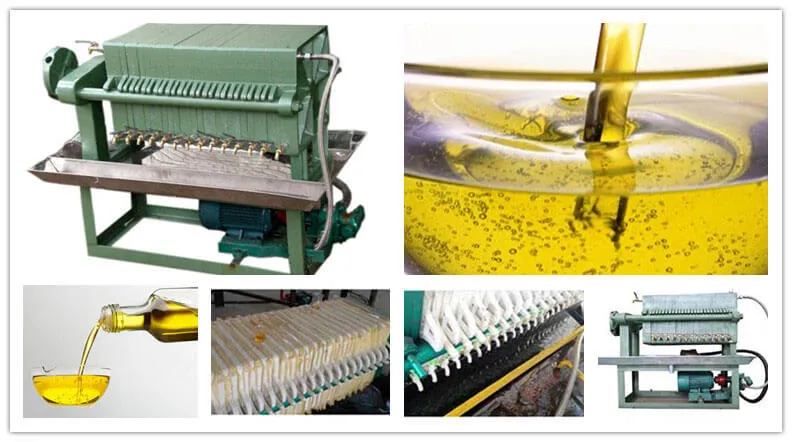
Filtration primarily targets suspended material; a refining project has a broader treatment brief. The equipment should follow the oil-quality objective.
Identify the problem you want to solve
Cloudiness, visible sediment and a buyer’s refined-oil requirement should not be treated as the same problem. Describe what you observe and what the buyer expects, then discuss a treatment route with suitable technical support.
Describe a filtration trial
Record the oil source, temperature and sediment condition. Ask which filter medium is used and how frequently it needs cleaning. A useful comparison includes the feed pump and receiving vessel, not only the filter unit.
Keep quality claims separate
Clear-looking oil is not proof that every quality criterion has been met. Avoid describing a filter purchase as a complete refining solution unless the complete process and acceptance criteria support that description.
Choose an upgrade boundary
An existing workshop may first need a coordinated press-and-filter arrangement. A later change in product specification can trigger a separate refining discussion. Keep the oil-transfer connections and workspace in the expansion plan.
Prepare these details
- Oil condition before treatment
- Objective of each proposed stage
- Cleaning and media replacement
- Quality checks for the intended market
Discuss a practical configuration
Send your material, required input, working schedule, country and available power supply. We can use that brief to discuss a single machine, a coordinated workshop setup or a future production line.
View related equipment · Explore raw-material solutions · Discuss your project