
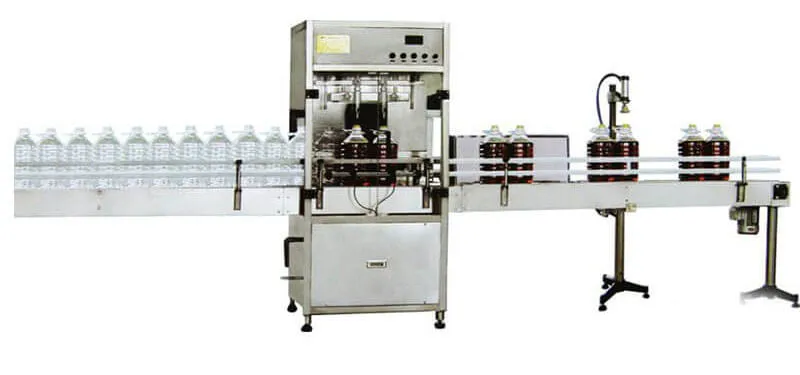
Compare manual loading and automatic indexing using real bottles, output, changeover and cleaning time.
What this guide helps you decide
- Automation should follow a stable container range and real demand.
- Count changeover and cleaning, not only filling speed.
- Capping, labelling and packing may remain separate stages.
- Acceptance tests should use the actual bottle and oil.
Define the container first
Send samples or accurate dimensions of every planned bottle and cap. Container stability, neck size, fill volume and label format determine whether automatic handling is practical.
Calculate demand realistically
Use average and peak demand, not the highest possible figure. Include seasonal patterns, batch frequency and available operating hours. A machine that runs only occasionally may not justify complex changeover.
Write down the assumptions behind every capacity, output or quality claim before comparing quotations.
Compare the whole workflow
Semi-automatic systems rely on operators to place containers and manage the cycle. Automatic systems require container transfer, indexing and often downstream capping or packing. One bottleneck can cancel the filling-speed advantage.
Price cleaning and changeover
Automatic equipment may require more parts to remove, flush and reset. Ask for a changeover sequence and a realistic time for each bottle and product.
Check oil supply and foaming
A stable buffer tank, pump and nozzle arrangement are part of filling performance. Oils that foam or change viscosity can affect accuracy and cycle time.
Run a formal acceptance test
Define fill accuracy, container rejection, leakage, line stoppage and cleaning criteria. Use the actual oil and container samples before final acceptance.
Comparison and project inputs
| Factor | Semi-automatic | Automatic |
|---|---|---|
| Container handling | Operator-led loading and removal | Indexing or conveyor transfer |
| Best fit | Small or changing batches | Stable container range and repeated output |
| Changeover | Often simpler but more manual | Must be measured and documented |
| Support | Basic maintenance and operator training | Controls, sensors and line coordination |
Buyer checklist
- Representative raw material, oil or container sample
- Target daily input or output and operating schedule
- Destination power and utility information
- Finished-product route and market requirements to verify
- Available workspace, existing equipment and planned expansion
Questions to discuss before committing
What production volume justifies automation?
There is no universal number. Compare labour, changeover, waste, uptime and maintenance using the actual container and demand plan.
Can automation handle multiple bottle sizes?
Possible configurations vary. Confirm change parts, setup time and accuracy for every bottle.
Is capping included?
Not automatically. The quotation must itemize filling, capping, labelling, coding and packing scope.
View the related equipment page · Discuss your project · Explore equipment · Open the setup planner